
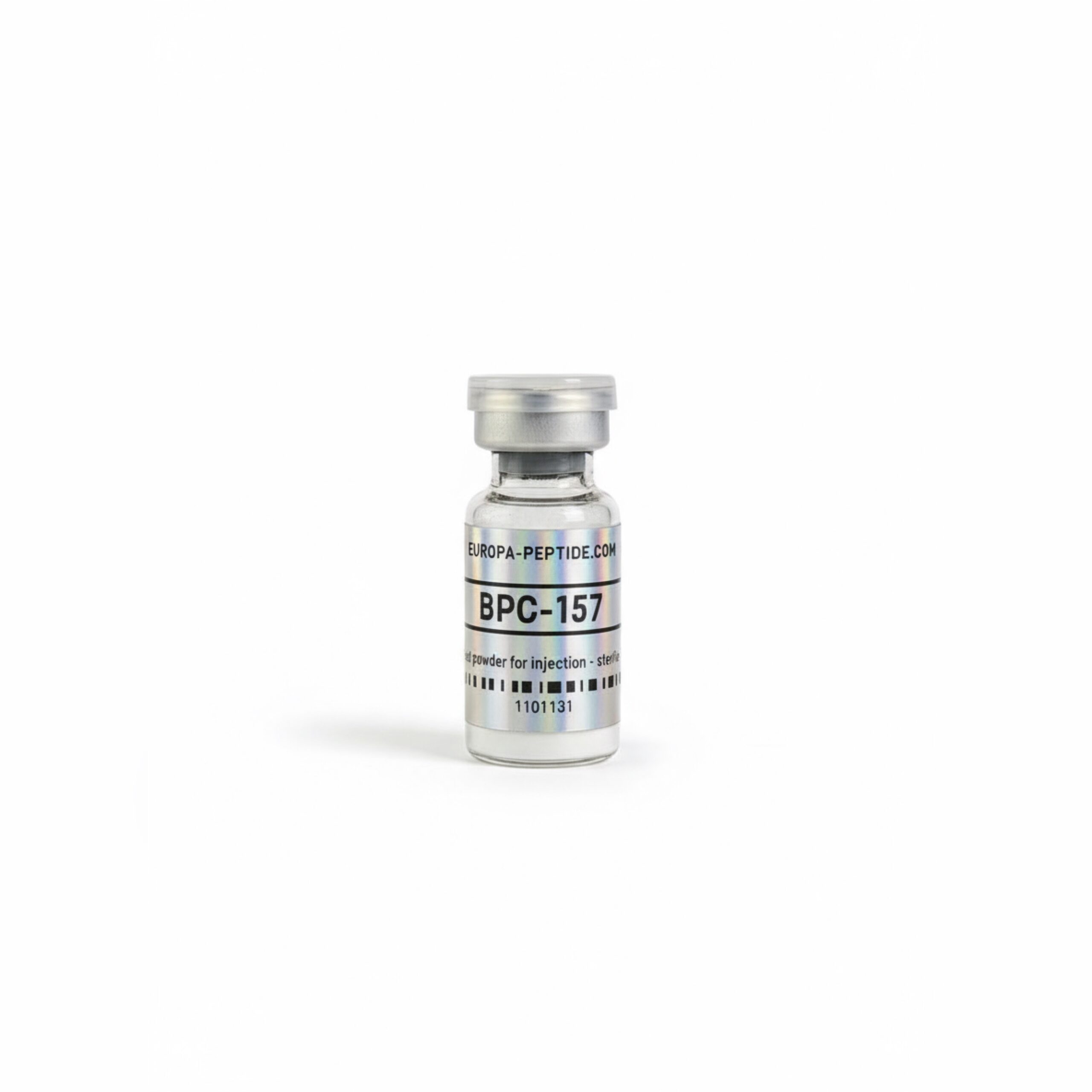
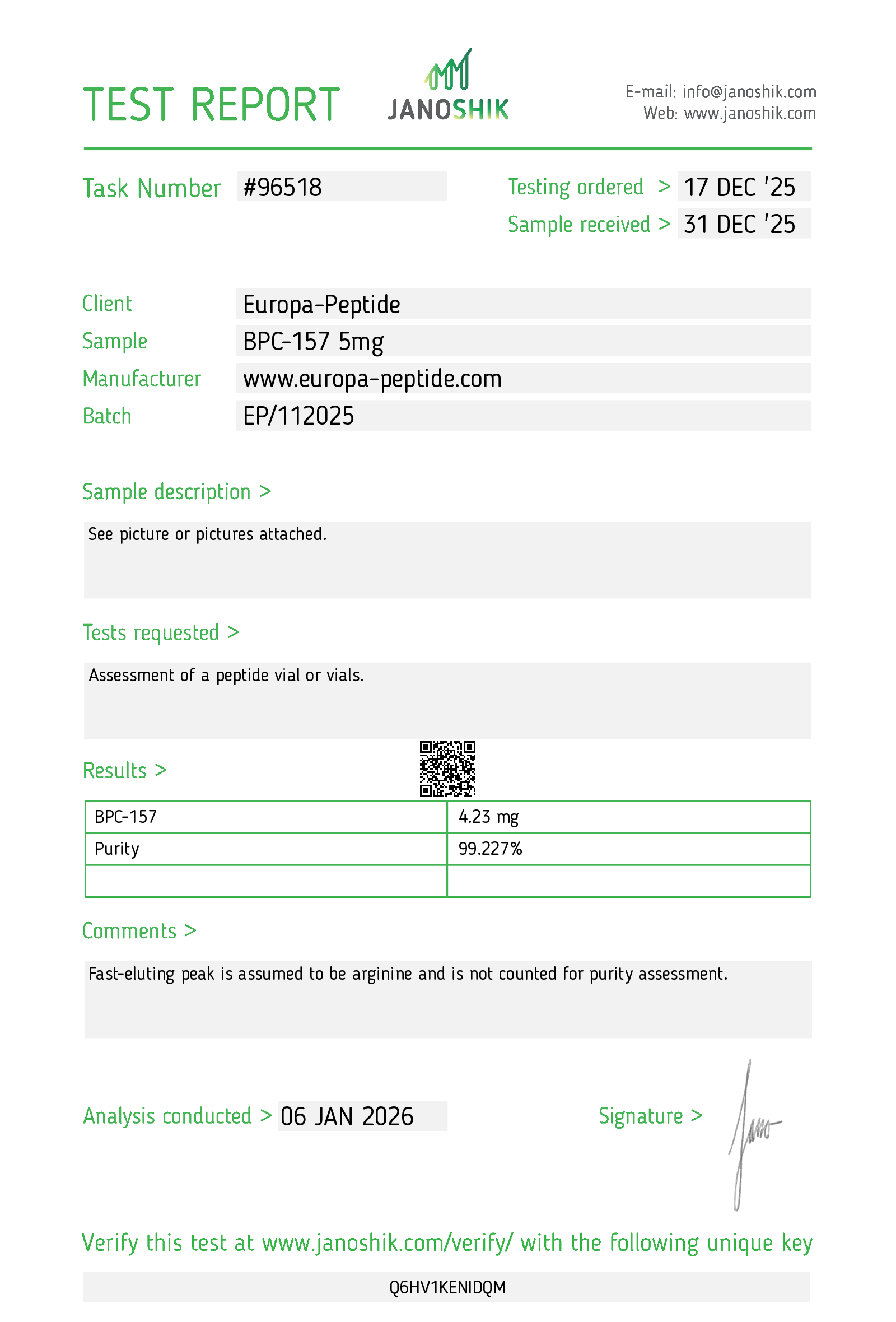
BPC-157 (Body Protectant 157) – Regenerative Peptide for Tissue Protection & Healing
Peptide Type: Pentadecapeptide (15 amino acids)
Synonym: PL-14736
Category: Peptide
Form: Vial with lyophilized powder
What is BPC-157?
BPC-157 is a synthetic pentadecapeptide that has shown a broad range of tissue-protective and regenerative properties in preclinical studies.
It was originally identified for its protective effects on the gastrointestinal mucosa, but animal and cell studies have revealed additional effects extending beyond the GI tract — notably on tendons, ligaments, muscles, bones, vascular tissue, and the nervous system.
Clinical data in humans remain very limited; therefore, the following information is provided solely for scientific and research purposes.
➡️ Ideal for tissue regeneration, wound healing, and anti-inflammatory research.
Mechanisms of Action (Preclinical)
NO Pathway & Angiogenesis:
BPC-157 modulates the nitric oxide signaling pathway and promotes angiogenic processes (e.g., VEGF, TGF-β, FGF).
In preclinical models, this is associated with improved microcirculation and tissue perfusion.
Inflammation Modulation:
Upregulates anti-inflammatory transcription factors and receptors, potentially supporting systemic regenerative mechanisms.
Matrix & Collagen Formation:
Stimulates fibroblast proliferation, enhances collagen synthesis, and supports tissue maturation in wound-healing models.
Preclinical Observations (Animal & In Vitro Studies)
BPC-157 has been investigated in numerous preclinical studies, demonstrating:
-
Protective effects in the gastrointestinal tract
-
Accelerated healing of muscles, tendons, and skin
-
Improved recovery after injuries or burns
-
Positive vascular and neural effects (e.g., endothelial protection, neuroprotection with functional recovery)
-
Potential modulation of fibrotic liver processes and reduction of alcohol- or inflammation-induced damage
Safety & Side Effects (Available Data)
Human clinical studies: Rare; a conclusive safety profile has not yet been established.
Preclinical findings: Occasional local redness or mild pain at the injection site (model-dependent).
Angiogenesis Note:
Since BPC-157 promotes new blood vessel formation, theoretical concerns exist regarding tumor angiogenesis in certain contexts.
This has not been demonstrated in humans but should be considered a potential risk factor in experimental design.
Reconstitution & Handling
-
Slowly allow the diluent to run down the inner wall of the vial (do not inject directly onto the powder).
-
Gently swirl (do not shake) until the powder is fully dissolved into a clear solution.
-
Do not mix peptides: Avoid combining BPC-157 with other peptides in the same syringe or vial.
-
After reconstitution, store refrigerated at 2–8 °C and use within approximately 21 days (stability depends on solvent).
Combination Insights
Scientific literature describes interactions with growth factor signaling pathways (e.g., increased growth hormone receptor expression in tendon fibroblasts).
Some research groups hypothesize synergistic effects when combined with growth-promoting stimuli.
Storage Conditions
-
Store dry and protected from light.
-
Keep unopened vials and reconstituted solutions refrigerated at 2–8 °C (36–46 °F).
-
Do not freeze.
-
Avoid temperature fluctuations; remove from refrigeration only when needed.
Order BPC-157 (Body Protectant 157) – and explore its potential in tissue protection, regeneration, and healing research.


Paul H. –
Eure Produkte haben echt die versprochene Wirkung! Bin sehr zufrieden!
Alex (verified owner) –
Im Kombination mit TB-500, auch bekannt unter dem Wolfverine stack , das perfekte gemisch um die Heilung aufs höchste Level zu bringen . Und Mit dem Code : crazylex ,spart man 15% noch zusätzlich.